
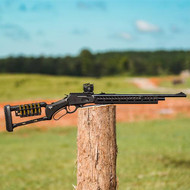
Tactical Lever Action Rifle Setup: Complete Modernization Guide
Posted by Ranger Point Team on Dec 25th 2025
A tactical lever action rifle is a traditional lever action platform upgraded with modern features to improve ergonomics, aiming speed, accessory mounting, and control. Can you make a lever action tactical? Yes. Thoughtful parts selection, correct fitment, and attention to timing and safety turn a classic lever gun into a capable home defense, competition, or training tool while keeping lever reliability intact.
This guide walks you through why you might modernize a lever action, the exact step by step upgrades to consider, a complete Marlin 336 transformation example with SKU-level recommendations, installation notes and legal considerations, and a practical budget plan so you know what to buy next.
Why would you modernize a lever action rifle?
Modernizing a lever action improves target acquisition, reduces follow-up time, and expands functionality. Upgrades let you mount optics and lights, control recoil, and add quick sling options while maintaining the simple reliability lever guns are famous for. The result is a rifle that is more useful in low light, closer range, and dynamic environments without losing the tactile satisfaction of a lever.
What are the essential tactical upgrades and how do you install them step by step?
Below is a clear, numbered transformation process designed for easy extraction, followed by installation difficulty and compatibility notes.
- Install a tactical stock or chassis system
- Purpose: better cheek weld, adjustable length of pull, and built in QD or monopod points.
- RPP pick: RPP-STK-HEN-LR Long Ranger tactical stock (fits Long Ranger family), RPP-STK-M336-TAC Marlin 336 tactical stock (verify receiver inlet).
- Difficulty: Moderate. Check bedding and fit; gunsmith recommended if bedding required.
- Fit an M-LOK handguard for accessory mounting
- Purpose: add lights, lasers, bipods, and QD mounts without changing balance dramatically.
- RPP pick: RPP-HG-MLK-1895 M-LOK handguard for 1895 families, RPP-HG-MLK-M336 for Marlin 336 variants where compatible.
- Difficulty: Moderate. Verify barrel band style and mag tube clearance.
- Mount optics, choose between red dot or LPVO
- Purpose: fast target acquisition with red dots, or mid-range versatility with LPVO.
- RPP pick: RPP-SM-HEN-01 receiver rail for Henry X, RPP-SM-M336-ADP clamp rail for Marlin 336.
- Difficulty: Easy to Moderate for receiver rails, ensure correct height for co-witness with iron sights.
- Select and install a muzzle device for recoil control
- Purpose: reduce felt recoil and muzzle rise for faster follow-ups.
- RPP pick: RPP-MBG-HAWG Recoil Hawg for large bore lever guns, or RPP-CMT-30 low profile Comet brake for .30-30.
- Difficulty: Moderate to Hard. Threading and timing may need a gunsmith.
- Upgrade the lever and lever loop for speed and comfort
- Purpose: better knuckle clearance and faster manipulation, especially with gloves.
- RPP pick: RPP-LEV-MED medium loop, RPP-LEV-LRG large loop for gloved use.
- Difficulty: Easy.
- Add tactical sights or backup iron sights
- Purpose: backup aiming solution, rapid target acquisition.
- RPP pick: RPP-PEEP-001 adjustable peep with fiber front, RPP-GR-001 ghost ring rear for close work.
- Difficulty: Easy.
- Fit sling hardware and QD sockets for carry and transitions
- Purpose: fast shoulder changes, stable one handed carry and retention.
- RPP pick: RPP-QD-STD QD sling set with matched socket plates.
- Difficulty: Easy.
What does a complete Marlin 336 tactical transformation look like?
Complete Build Example: Marlin 336 Tactical Transformation
- Chassis/Stock: RPP-STK-M336-TAC
- Handguard: RPP-HG-MLK-M336 (M-LOK)
- Optic Rail: RPP-SM-M336-ADP + 1-4x LPVO or micro red dot
- Muzzle Device: RPP-CMT-30 Comet style muzzle brake (confirm your thread pitch).
- Lever: RPP-LEV-MED medium loop lever
- Trigger: RPP-TRG-HP drop-in trigger kit for smoother break
- Sling: RPP-QD-STD QD mounts and two point tactical sling
- Magazine: RPP-MAG-EXT-336 (if legal and compatible)
Before: wood forend, iron sights, long lever throw, limited carry options.
After: adjustable stock, optics, M-LOK forend with light, medium loop lever, recoil control, QD sling for fast transitions.
Expected performance gains: faster follow-up times, better low-light capability, improved shooter comfort on repeated strings.
How does installation difficulty break down by upgrade?
- Easy: lever swap, sling hardware, peep sights.
- Moderate: stock swap, handguard installation, receiver rail mounting, trigger kits.
- Hard: muzzle threading, timing brakes, barrel work or bedding.
When in doubtuse a qualified gunsmith.
What are the use cases for a tactical lever action rifle?
- Home defense: fast handling, easy transitions, optics for low light.
- Competition: fast cycling and reliable follow-ups for cowboy action or practical matches.
- Tactical training: platforms for scenario training where lever familiarity is desired.
- Wildland or brush hunting: compact, protected rigs for tight cover.
Are there legal considerations I should know?
Yes. verall length, and muzzle devices (such as suppressors) are subject to local, state, and federal regulations.. Always confirm legal constraints in your jurisdiction before modifying capacity or adding suppressor-ready devices.
What does a tactical build cost and how should I budget?
Budget Planning: Estimated Cost Breakdown
- Entry Build: $250 to $650
- Lever loop, sling hardware, basic peep sights, and a budget red dot.
- Mid-Range Build: $650 to $1,400
- Quality stock, M-LOK handguard, mid-level 1-4x optic, trigger kit, QD sling.
- Premium Build: $1,400 to $3,000+
- Chassis system, premium LPVO, timed muzzle brake, match trigger, pro gunsmithing.
Prices vary by brand and labor. Prioritize mission critical items first, optics and handling over cosmetic upgrades.
What are common pitfalls and how do I avoid them?
- Ignoring fitment: Verify model, generation, and serial ranges for parts. RPP product pages list fitment.
- Overlooking legal rules: Check capacity and NFA rules before adding extensions or suppressor-ready devices.
FAQs
Q1. What makes a lever action rifle tactical?
A tactical lever action integrates modern features like adjustable stocks, optics, accessory rails, muzzle devices, and sling systems while keeping lever-driven operation.
Q2. Will tactical upgrades affect my lever action’s reliability?
Properly designed parts and correct installation improve reliability. Avoid ill-fitting hardware and consult RPP fitment notes or a gunsmith for timing-critical work.
Q3. What is the best optic for a tactical lever action rifle?
A LPVO) or high-quality micro red dot depending on range and mission.
Q4. How much does it cost to build a complete tactical lever action setup?
Expect $650 for a solid mid-range build up to $1,400 or more for premium components and whether or not a professional gunsmith is needed.
Q5. Are tactical lever actions practical for home defense?
Yes. With a short barrel, optic, light, and sling, a tactical lever action is maneuverable and fast for close quarters while offering superior stopping power.
Conclusion: How do you modernize without sacrificing reliability?
Start with ergonomics, add optics, control recoil, and finish with practical sling and sight solutions. Use RPP compatibility charts, installation guides, and tech support to ensure parts fit your Henry, Marlin, Winchester, Rossi, or Citadel platform. When built right, a tactical lever action becomes a dependable, versatile rifle that stays true to its lever-action roots while offering modern capability.
Explore RPP’s tactical parts and fitment guides to begin your build:
Shop Marlin Parts → | Shop M-LOK Handguards & Stocks → | Shop Muzzle Brakes →