


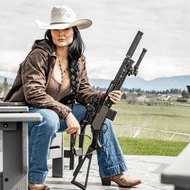
The Bigger Idea Behind the LINE49 Henry Supreme Lever Action Conversion Kits
Posted by Line49 Rifle on Oct 19th 2026
The Henry Lever Action Supreme shattered the traditional limitations of the lever-gun platform, blending modern modularity with classic utility. By chambering intermediate tactical rounds, and accepting standard AR-15 magazines, it offers shooters an incredibly quiet, gas-free suppressor host, and a high-performance hunting or range rifle that completely side-steps semi-automatic firearm restrictions in ban-heavy states. Ultimately, it elevates a 19th-century action into a viable, sub-MOA accurate alternative to the modern sporting rifle.
In late 2025, Line49 Rifle and Ranger Point Precision focused our R&D efforts on the Henry Supreme platform. We saw great potential to develop a full line of aftermarket performance parts.
- Line49 led the design and testing of a whole line of match grade barrels in SBR and 16” configurations, a modified barrel nut for quick barrel swaps, and bolt assemblies that are needed for the ARC caliber conversions. Line49R Henry Supreme match-grade barrels and full Conversion Kits.
- Ranger Point Precision Henry Supreme products for sale: M-LOK Handguards 16” and SBR-length, Adjustable Stocks, and 1913 Stock Adapters to attach a pistol brace or folding stock.
Read more about the Line49R and Ranger Point Precision collaboration in this article from NRA American Rifleman Magazine.
The Inspiration for R&D
The most interesting part may not be any individual caliber. It's what happens when you stop thinking about a lever action as a rifle permanently defined by the cartridge stamped on its barrel. The Henry Supreme already brought detachable AR-pattern magazines into the lever-action world.
With the LINE49 Caliber Conversion Kits, you can quickly upgrade your current Henry Supreme rifle from a 16” barrel to an SBR or change calibers from the factory chamberings in 223/556, 300 Blackout, or 450 Bushmaster to one or the other or exciting new options such as 6 ARC or 338 ARC.
Once the initial Conversion Kit work is done, with an improved quick change barrel nut, you can convert the rifle as much as you want to barrel lengths, calibers, and ammo magazines. Run 5.56 for a high-volume range day, move to .300 BLK for a compact suppressed setup, switch to 6 ARC when distance and precision matter, or configure the rifle in .338 ARC when heavier projectile performance is the priority.
A Guide to LINE49 | RIFLE Henry Supreme Conversion Kits
With the LINE49 Henry Supreme Conversion Kits, you can convert any Henry Supreme lever action to the an SBR or the caliber(s) of your choice: .223/5.56, .300 Blackout, 6 ARC, or .338 ARC — four cartridges with very different strengths, very different personalities, and very different practical applications.
Each caliber is best at one or more things. The .223/5.56 and .300 BLK configurations are exceptionally well suited to high-volume shooting. These are the rifles you can take to the range, run hard, put a lot of rounds through, and keep cycling. The ARC cartridges are different. 6 ARC and .338 ARC are better thought of as precision-oriented chamberings. They reward a more deliberate firing cadence that allows the barrel and the internal components of the Henry Supreme to manage heat between strings.
Understanding the Different Calibers
Choose your caliber based on the job intended - and change it as needed. Think of the distinction this way:
- .223/5.56 and .300 BLK are built to run.
- 6 ARC and .338 ARC are built to make individual shots matter.
.223/5.56 and .300 BLK: Run Them Hard
These chamberings are ideal for shooters who want to put a lot of rounds downrange. Whether you're training, shooting steel, working through drills, hunting predators, or simply spending an afternoon at the range, the smaller cartridges lend themselves extremely well to sustained shooting. In simple terms: They are the natural choice when volume of fire, fast follow-up shots, and long shooting sessions are part of the plan.
6 ARC and .338 ARC: Precision Comes First
The ARC cartridges bring substantially different performance to the Supreme platform.
They also generate a different heat profile. 6 ARC and .338 ARC perform best when they're treated as the precision cartridges they are: fire a controlled string, make the shot count, and give the rifle an opportunity to manage heat rather than repeatedly dumping rounds through it. When the barrel and internal components become excessively hot, shooters can begin to notice the action feeling sticky or tighter during cycling. That isn't an indication that the rifle suddenly stopped working. It's an indication that you've moved outside the type of firing cadence where the ARC chamberings are at their best. For hunting and precision shooting, this is rarely a practical limitation. Those applications naturally involve slower, deliberate shots rather than continuous high-volume fire.
Which Henry Supreme Lever Action Rifle Caliber Is Right for You?
.223 / 5.56: The High-Volume All-Rounder
If versatility, ammunition availability, manageable recoil, and trigger time are at the top of the list, .223/5.56 is an easy place to start. It is one of the most common centerfire rifle cartridges in North America, making it especially practical for shooters who already own 5.56 rifles and want ammunition compatibility across multiple platforms.
Where .223/5.56 shines:
High-Volume Shooting
This is one of the biggest differences between 5.56 and the ARC chamberings. If your idea of a good range day involves running magazine after magazine through your Henry Supreme, 5.56 is exactly the type of cartridge that makes sense. The rifle can be used far more aggressively without requiring the same heat-management mindset as the ARC configurations.
Range and Training
Low recoil makes 5.56 comfortable to shoot in volume and approachable for newer shooters. It is an excellent choice for practicing fundamentals, running drills, shooting steel, and simply spending more time behind the rifle.
Predators and Varmints
With appropriate ammunition, .223/5.56 is well suited to coyotes, foxes, prairie dogs, and other varmint or predator applications.
A Lightweight General-Purpose Rifle
A Henry Supreme chambered in 5.56 makes sense for the shooter who values a light, handy rifle without needing the additional projectile weight or extended-range capability offered by the ARC cartridges.
Where it fits best
Rather than asking 5.56 to perform like a heavier hunting cartridge, use it where its characteristics become an advantage:
high-volume shooting, training, predator hunting, low recoil, and general-purpose use.
Best for:
Range shooting | Training | High-volume shooting | Predators | Varmints | Low recoil
.300 Blackout: The Compact and Suppressed Workhorse
The appeal of .300 Blackout is different from 5.56, but it shares one important characteristic: It's another chambering you can run hard.
For shooters who want a compact Henry Supreme, suppressed capability, and the ability to put plenty of rounds through the rifle without treating every magazine like a precision firing string, .300 BLK is an extremely practical choice.
Where .300 Blackout shines
Compact Rifles
.300 Blackout performs exceptionally well in shorter barrels, making it particularly attractive for compact Henry Supreme configurations.
Suppressed Shooting
This is where .300 BLK has built much of its reputation. Heavy subsonic ammunition paired with an appropriate suppressor gives shooters an entirely different experience than a traditional supersonic rifle cartridge.
High-Volume Range Use
Unlike the ARC chamberings, .300 BLK is comfortable living in a faster shooting environment. If the goal is to run the lever, shoot steel, train, and keep feeding the rifle, .300 BLK is far better suited to that type of use.
Supersonic + Subsonic Flexibility
Ammunition selection can dramatically change the personality of the rifle. Supersonic ammunition prioritizes velocity and hunting performance. Subsonic ammunition prioritizes quiet operation and heavy projectile mass.
Where it fits best
.300 BLK isn't trying to be the flattest-shooting cartridge in the lineup. Its strength is almost the opposite. It makes the most sense when the priority is a compact rifle, suppressed shooting, practical hunting distances, and a platform you can run hard at the range.
Best for:
Suppressors | Compact builds | High-volume shooting | Subsonic shooting | Hogs | Woods hunting
6mm ARC: The Precision and Distance Option
If the goal is to stretch the capability of the Henry Supreme platform, 6mm ARC is where things get interesting. 6 ARC gives shooters a high-ballistic-coefficient 6mm projectile with excellent efficiency, flatter trajectory, reduced wind drift, and substantially greater extended-range potential than the smaller cartridges. This is the chambering for the shooter who cares more about where the next round lands than how quickly they can empty the magazine.
Where 6 ARC shines
Deer Hunting
With appropriate hunting ammunition and responsible shot placement, 6 ARC is an excellent option for deer hunters who want strong external ballistics without stepping into a heavy-recoiling cartridge.
Open-Country Hunting
When hunting across fields, coulees, foothills, or other terrain where distance can increase quickly, the ballistic advantages of 6 ARC become much more valuable.
Precision Shooting
This is where the cartridge belongs. Shoot a group > Watch the conditions > Let the rifle manage heat > Make the next shot count. That's a completely different use case than spending an afternoon rapidly cycling 5.56 through the rifle.
Predators at Distance
For coyotes and other predators where shots may extend beyond conventional .223 distances, 6 ARC provides another level of ballistic capability.
A note on firing cadence
6 ARC is not the caliber we would choose if the primary goal is repeatedly firing magazines as quickly as possible. As temperatures rise through sustained shooting, heat is transferred through the barrel and Henry Supreme internal components. If the system becomes excessively hot, cycling can begin to feel sticky or tighter than normal. Give the rifle an opportunity to cool and you're bringing it back into the operating environment where the cartridge performs best. For its intended use—hunting, precision shooting, and deliberate longer-range fire—that firing cadence is completely natural.
Where it fits best
When the terrain opens up and wind, trajectory, accuracy, and retained performance at distance begin to matter, that's where 6 ARC earns its place.
Best for:
Deer | Predators | Open-country hunting | Precision shooting | Extended range
.338 ARC: Heavy-Hitting Precision
Then there is .338 ARC. This is the heaviest and most specialized chambering in the LINE49 Henry Supreme lineup. It gives the platform access to substantially heavier projectiles while maintaining the compact cartridge architecture that makes the ARC family so interesting. Where 6 ARC emphasizes aerodynamic efficiency and distance, .338 ARC emphasizes projectile mass, suppressed performance, and authority at practical ranges.
Where .338 ARC shines
Heavy Subsonic Performance
For shooters who like the concept of .300 Blackout but want considerably more projectile mass, .338 ARC takes the idea to another level.
Suppressed Hunting
For hunters who prioritize a suppressor, heavy bullets, and practical hunting distances, .338 ARC presents an extremely interesting combination.
Hogs and Woods Hunting
In thicker terrain where shots are generally closer and terminal performance carries more importance than extremely flat trajectory, the characteristics of .338 ARC make a great deal of sense.
Purposeful Shooting
Like 6 ARC, .338 ARC is at its best with a deliberate firing cadence. This is not intended to be the rifle you repeatedly dump magazines through until everything is too hot to touch. It is a cartridge designed around purposeful shots.
A note on heat
The same heat-management principle applies here as it does with 6 ARC. If enough rounds are fired quickly enough to significantly overheat the barrel and internal components, the action can begin to feel sticky during cycling. Allow the system to cool and you're back within the type of operating environment where .338 ARC is intended to perform. For hunting, suppressed use, and precision-oriented shooting, that distinction is rarely a meaningful limitation. It's simply a different style of rifle use.
Where it fits best
Where 6 ARC prioritizes distance, .338 ARC prioritizes projectile mass and practical-range performance.
Best for:
Suppressed shooting | Heavy subsonics | Hogs | Deer | Woods hunting | Precision-oriented use
Four Calibers. Two Different Personalities.
Choosing a Henry Supreme conversion becomes much easier once you understand the fundamental difference between the cartridges.
|
Caliber |
Personality |
Ideal Applications |
|
.223/5.56 |
Shoot it all day |
Range, training, predators, varmints |
|
.300 BLK |
Compact and run-it-hard versatile |
Suppressed use, range, hogs, woods |
|
6mm ARC |
Precision and distance |
Deer, predators, extended range, precision |
|
.338 ARC |
Heavy and deliberate |
Suppressed hunting, heavy projectiles, woods |
Or put even more simply:
Want to shoot a lot?
Choose .223/5.56.
Want to shoot a lot, stay compact, and suppress it?
Choose .300 BLK.
Want to slow down and reach farther?
Choose 6 ARC.
Want to slow down and hit with a much heavier projectile?
Choose .338 ARC.
Shoot the Rifle the Way the Cartridge Was Designed to Be Used
One of the biggest mistakes when comparing cartridges is assuming they should all behave the same way. They shouldn't. A 5.56 range rifle and a 6 ARC precision rifle are solving different problems. A .300 BLK suppressor host and a .338 ARC hunting configuration are solving different problems. That's the point of offering multiple chamberings.
The LINE49 Henry Supreme conversions allow the rifle to be configured around how you actually intend to use it. For some shooters, that means spending the afternoon hammering steel and cycling hundreds of rounds. For others, it means settling into a stable position, reading the wind, and making one shot exactly where it needs to go.